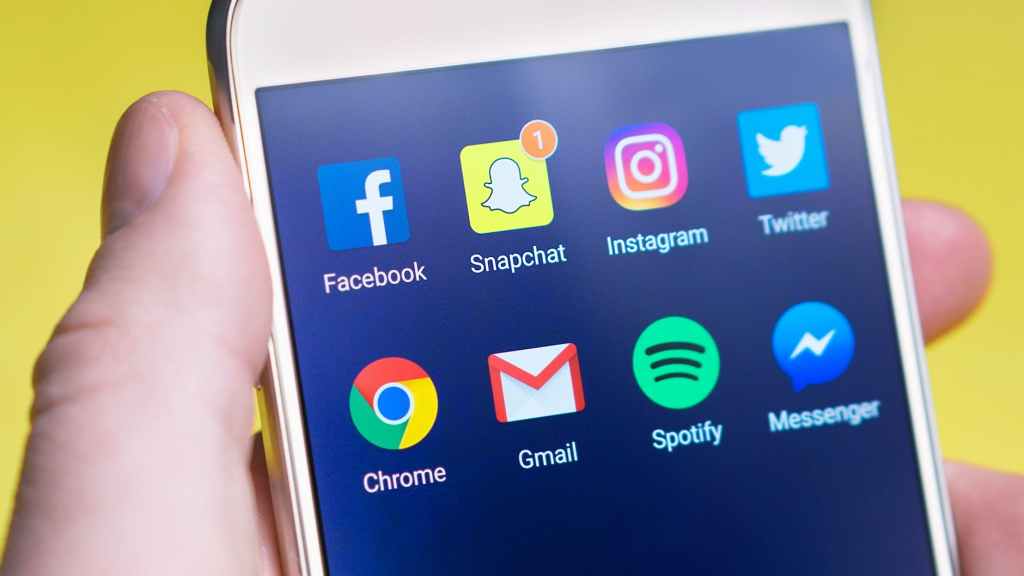

The internet is our second home. We go there in an act of deferral, putting the present moment off until we’re ready to be in it again. It begs to be involved in our lives, enticing us with new videos, photos, updates, news headlines, and other algorhythmic treats every few minutes.
Like a lot of people, I take my phone from one room to another, wanting to distract myself from the silence. I play podcasts while showering, match little green turtles while my dinner cooks, and scroll Instagram for that last hit of dopamine before trying to sleep.
It’s strange to think that I remember a time without internet. I was once a girl who, when bored, would yank out toy boxes from the back of the closet to teach them their ABCs or raid the crafting cabinets to make an entire village of pipe-cleaner hobbits. I would write stories on printer paper and bind them with state-of-the-art staples, admiring my impeccable work while sitting criss-cross on my bedroom carpet, surrounded by whatever interesting doodads I’d collected like a greedy raven from around the house.
It’s difficult to admit I lost track of that girl’s essence. I let her go by the wayside as all of life’s activities and connections started to revolve around computers and phones and virtual worlds. As a writer and a human living in 2023, everything I do is online. It’s my life, my second soul.
So when my internet suddenly went out one cold February day, I was forced to face the reality of what that really meant.
Day 1: Shock

As soon as the lights on the router vanished, I felt a shock of bodily tension rise from my feet to my ears. How dare the universe pull such a fast one! Didn’t it know I had things to do? I didn’t have time to wait around! As a westerner, I was entitled to the internet—everyone had it, including the sheep farmers on the island!
I waited. For hours. But the darn router lights stayed black as midnight on a moonless night.
Oh, did it feel personal. Like I’d done something wrong, like I was being taught a lesson.
I couldn’t play my online games or watch anything except for what Tom had downloaded on the external hard drive (such riveting films as Samurai Cop and Hard Ticket to Hawaii). I couldn’t message anyone. I couldn’t check the news to see if someone important had died or what other calamity was surfacing in the zeitgeist. I couldn’t moniter the weather forecast. I couldn’t look at funny cats.
It was like my field of vision had narrowed into a small dot. It was unfamiliar. Animalistic. Rudimentary. I found myself pacing the living room trying to figure out what to do with myself. My phone and laptop, which had been essential to me just that morning, had suddenly lost all utility. They were hunks of metal and wire and compounds that would not biodegrade, not in thousands and thousands of years, and their gloss looked dead, their bright screens inexplicably worse than the yellowing paper notepad from the ’70s that lay beside them on the table.
That night, I remember the quiet buzzing of my understimulated brain and how much it wanted feeding. But I knew that—like most things on the island—this problem wasn’t going to be solved any time soon and I had to, as HG Wells put it, “Adapt or perish.”
Day 2: Anxiety
I woke up feverishly on Day 2—grabbed my phone from the nightstand, expecting to see missed messages, calls, and dozens of app notifications, but all was quiet. The bedroom, washed in dim sunlight and sporting white walls and minimal furniture, looked like a nuclear bunker. I couldn’t shake the feeling that just outside scary and important things were happening that I knew nothing about. Things that could affect me.
It was like that time my mom randomly woke me and my brother up early one morning and announced that we had a tennis lesson in an hour. We had never taken tennis lessons before and had no idea she’d signed us up. My brother was rueful, but I liked swinging rackets and smacking balls, so to me that wasn’t the issue. What made me sour was that I hadn’t known it was going to happen; that I had been oblivious until the very last moment and had only minutes to adapt.
I get irritable when someone mentions a movie I’ve never watched or a song I’ve never heard or a news story that everyone knows about that I don’t. I should have known about it. I should have been prepared, not caught off guard. Until recently I didn’t know why, but this stems from my generalized anxiety disorder: having any information sprung upon me that I’m not actively seeking out myself rings like an alarm bell—if I don’t know that, what else don’t I know? What if there’s something dangerous, or sad, or essential I’m missing?
The whole day went by in a haze of disquiet. I read a little, napped, walked to the beach, ate my meals, and sat awkwardly without distraction. Something was about to happen; I was sure of it. A bad storm was coming. My mother was in the hospital and couldn’t reach me. The economy was plummeting. More wars were being waged.
And I couldn’t do a damn thing to prepare for it.
Day 3: Boredom

To have time and no desirable activity, chore, or job with which to fill it is a phenomenon of privilege. Not everyone has that amount of time to just exist. But on Day 3 that privilege didn’t feel like a blessing, but something to be reckoned with.
After breakfast, I put the dishes away and leaned against the counter. Nothing seemed interesting to me. Journaling? Already did that yesterday. Reading? Can’t concentrate. Exercising? Too tired. Cleaning? Forget it. Watching Samurai Cop a second time? Well…
It felt like I had stood there an hour, but my phone said only a few minutes had passed. I had so much time. Too much time. Time was dripping and oozing and filling the room in order to drown me. I always thought I needed more—and here it was. So why did feel I so blasé about it?
More than anything I wanted to open YouTube and let the recommended videos play on and on. Feeling and thinking for myself was too difficult. There was something rumbling underneath the crust of my conscious mind and I didn’t like it. I didn’t like the silence. I didn’t like the slowness. The birds whipping by the windows seemed to be leading a more exciting life than me.
Finally, I went in the bathroom and cut myself some curtain bangs—they were much too short, giving me a Southern-fried mullet kind of vibe, but I didn’t care. I looked in the mirror and marveled at the dry skin under my eyes. I smoothed my cheeks back. Time was ticking all along. Was I even listening?
That’s all I did that day. I was dulled and vacuous, doing nothing on my own but breathing. The truth was I hadn’t felt that bored in years, which always seemed like a point of pride for me—any unfilled second was an opportunity for my brain to hitch onto something new and become more interesting, making me more interesting as a person. As it turns out, I was only keeping myself from going deeper. The shallows of time are easy, fun, and distracting, but they’ll never give you that magnificent sense of discovery upon which all artists rely.
The internet had made it nearly impossible for me to slip farther from the shallows. It had braced me with floaties and taken away my oxygen tank and goggles. No wonder I often found myself with writers’ block. No wonder I consistently felt like I’d lost my creative spark, sending me into a spiral of self-depricating thoughts and imposter syndrome. Creativity—clarity—was out there, on its own little island, too far away to for me to ever reach.
Day 4: Awareness

By Day 4, I starting noticing a lot of things.
I noticed the crumbs from last-night’s dinner on the sofa.
I noticed how violently the sun hit the stone wall of the patio.
I noticed how my cats bathed at the exact same time despite being in different rooms.
I noticed how little water I drank.
I noticed how the island sheep sneezed like cats in unending rounds.
I noticed that I loved writing by hand.
I noticed how shallowly I tended to breathe.
I noticed how much more Tom and I hugged throughout the day.
I noticed how I’d skim lines of text while reading to “get the gist”.
I noticed that the rumbling in my mind was growing and that I couldn’t keep it from becoming unearthed.
Day 5: Understanding
It’s hard to suddenly realize that you’ve been hiding in a cloud for years and years and barely remember little details about your day-to-day life. I realized I hadn’t been nearly as present as I’d thought. I’d done everything in my power to escape uncomfortable or boring situations and painful emotions. Now that I was in a better place, it was clear that my mind desired presence more than anything—but I still hadn’t allowed it. I’d been heedlessly coralling it into a pen of constant, intentionless stimuli, where it only grew more anxious and shut off.
When your mind has fewer stimuli to cling to, it’s allowed to make impressions of important things: your surroundings, your physical state, your emotional state, your thoughts. It’s forced to take things in.
And when it’s made its survey and has found a sense of tranquility in its awareness, the mind has room to daydream. That’s where ideas are found. That’s where ideas can be caught and where creativity can flourish. I love David Lynch’s take on this:
By succumbing to the pressure to be a modern woman in a constantly connected world, I had let go of my main sources of pleasure: daydreaming for ideas and enjoying the small things.
A good joke my partner cracks gives me infinitely more pleasure than any meme. Watching my cats twitch their whiskers as they dream makes my heart burst with love greater than I could ever find through parasocial relationships with YouTubers. Writing my novel by hand even helped me turn off my internal editor and just enjoy the process of storytelling.
It’s like I had unlocked a secret room inside myself. I had found my childlike enthusiasm for life. Through my boredom, I could swim in a sea of new ideas, and in all that silence, I could absorb the things as they came and actually remember them.
You know how our grandparents always seem to be able to recall so many detailed events from their lives, even into their eighties and nineties? They were there for those events.
I realized I want to grow old and remember my life offline. I want to have memories founded in reality that go beyond just my childhood years. I want to be able to say I did everything with intention.
It sounds a bit cliche and preachy, but it’s truly how I felt on Day 5. I knew I had to commit to changing my habits, because I didn’t want to go back into the abyss, that stifling, worrisome, and restless abyss I had started inside on Day 1.
It was high time I curated my time online—not the other way around.
Day 6: Intention

When we finally found out why the internet had cut out, we nearly laughed. Turns out a group of road workers up the hill had sliced through the underground cable while digging their trench, and the whole village had been without internet along with us. If this had happened in a city, you can bet a riot would have ensued: the cable would’ve been fixed by the next day.
Here, though, the internet company took their time sending a repairman. And looking back, I’m glad it took that long. I might not have gone “there and back again” like I needed to. I might have continued on, irritated by a few hours of connection lost, and diving right into the murk headfirst without a thought.
That was my whole problem. The internet itself isn’t sinister, and the time we spend on it can be incredibly beneficial. We can take online courses and get college degrees from home. We can talk with our families. Research options when making expensive purchases. Unwind with a funny podcast. Read almost any kind of historical document imaginable. But if you climb onto the web without knowing where you’re headed, you can get easily stuck and subsequently devoured.
As soon as my phone got its little internet bars back, I immediately deleted Reddit so I couldn’t doom scroll and said goodbye to the mobile games I was addicted to. I made a point to leave my phone in the bedroom after getting up until I had a specific intention for using it. If I was going to work on my laptop, I would only open internet tabs that helped me reach a goal (thesaurus.com and YouTube for background music—no Facebook or Whatsapp).
Engaging with the online world intentionally (and just technology in general) made me feel less like I was simply distracting myself and more like I was learning and doing something. Do I still scroll Instagram? Absolutely. But when I recognize I’m hardly looking at the pictures and just flicking my thumb reflexively, I close the app. I’ll pick up my Kindle and read LOTR instead.
I know this all sounds so ridiculously obvious. Be intentional—DUH! We hear this and see it written on the soothing leafy pictures of holistic therapy posts, but do we truly get it?
I definitely didn’t. I thought I was holistic and cared about my mental and emotional wellness. I do yoga and meditate! I’m into my second year as a vegetarian! I also spend at least 7-8 hours of my day online, looking at one screen or another, and many of those hours were given away due to a fear of boredom or an unwillingness to hear what happens to me in silence.
This whole do-things-intentionally thing is hard. I slip up a lot, especially on days when I’m in pain or I’m tired. I try not to be critical of my slip-ups. I just pat myself on the back, say, “Alright, you had your mindless distraction. How about we read a little now or play with the cats?”
Treat yourself gently if you’re going to try to be more intentional. We’re not golden new-age gurus who somehow (well, seem to) have it all together. We’re humans in a highly digitized era where, if you’re privileged enough to have technology and internet, you’re expected to be online at all times and know all the latest trends and news.
Ask yourself: when was the last time you sat in complete silence? Even for just a minute or two? When’s the last time you gazed softly at the opposite wall or at the distant treeline and let your brain do its share of daydreaming? You may find you can’t daydream; your mind is full of anxiety or sadness. That’s an even bigger sign that you’re living out of balance.
How can we know if there’s something to address, and how to address it, if we habitually sweep it under the rug of distraction? How can we fully understand ourselves if we never give ourselves a chance to just exist? To settle into a natural shape beyond the bunker walls?
What sorts of transformations would take place if you had no internet for even just a day?


Leave a comment