“Necessity taught Dalibor to fiddle.”
Since Prague is the main setting of my historical novel, I’ve had to peel back layers of myth and storytelling to get to the facts. One of those myths that begged for a closer look was that of Dalibor of Kozojedy – an infamous tale of heroism, rebellion, and a 500-year-old restless ghost.
Though we don’t know exactly when Dalibor of Kozojedy was born, we can assume it was around the middle to late-middle 1400s. He was born into moderate nobility – his ancestors being knights – and his father, Aleš, was the lord of the small town of Netěš in the Ústecký kraj region of Bohemia.
Dalibor was a very real person, but we have little understanding of exactly what kind of a person. We don’t know what he looked like, how he spent his time, or what his values and morals were. His name lives on solely because of his acts in 1496.
It began when a neighboring lord, Adam Ploskovský of Drahonice, forced his subjects to carry out more and more free labor. The serfs rose up, taking over Ploskovský’s fortress, capturing him, and winning their case in court. They were released by law from his tyrannical rule and decided to work voluntarily for Dalibor of Kozojedy instead. They claimed he was a just and kind lord, and he protected them from harm.
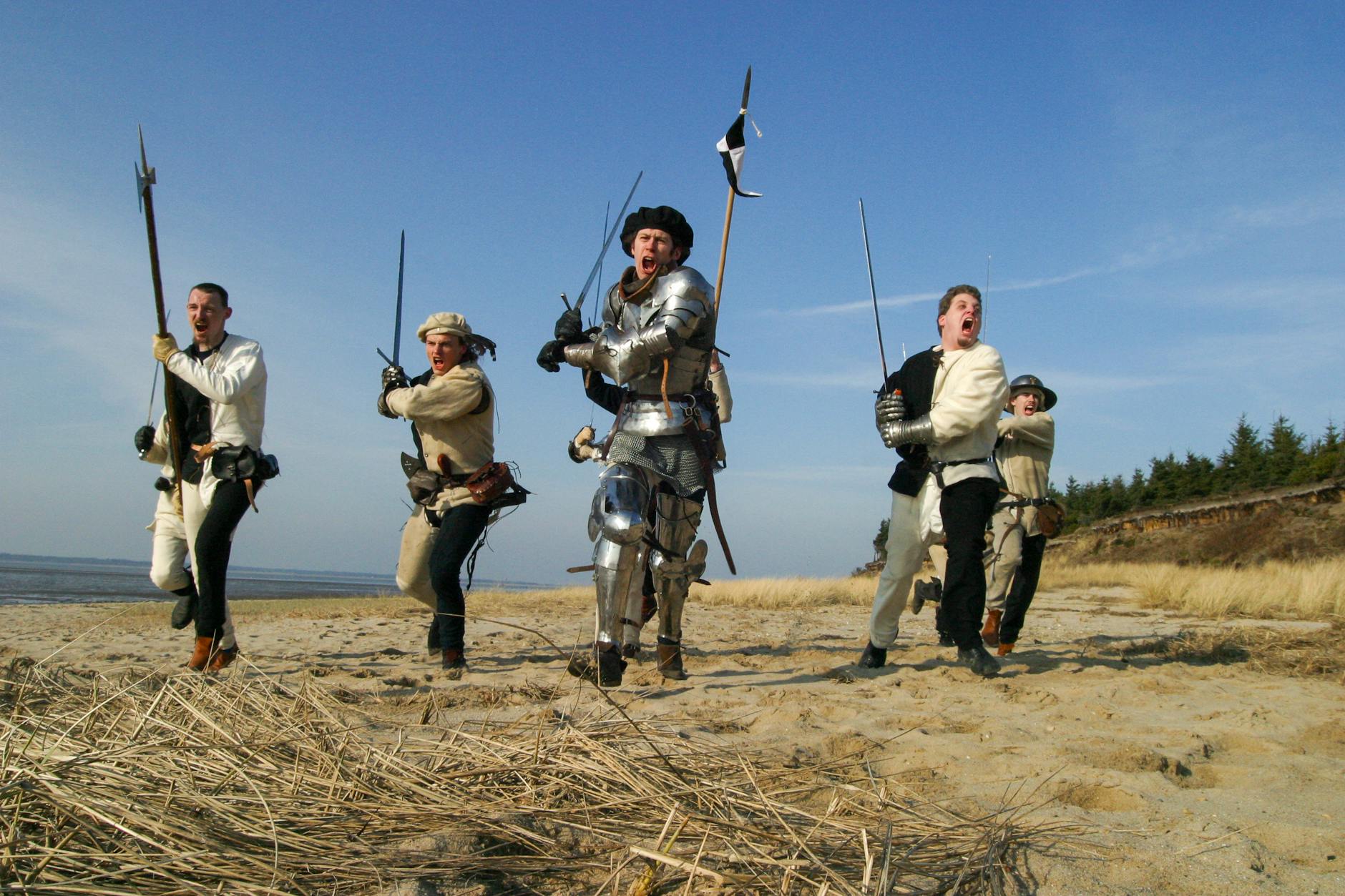
But Ploskovský didn’t sit on his haunches and wait around – he got hold of the release documents and complained to the courts at the highest levels. Ploskovský effectively sued Dalibor. The court found Dalibor guilty of unlawfully claiming goods belonging to Ploskovský, and he was immediately arrested and taken to Prague, where he was imprisoned.
As the myth goes, Dalibor managed to acquire a violin from a friendly prison guard and taught himself to play. He played so beautifully that people would gather and listen outside the tower; he would send a crocheted pouch out of the window and his fans would put treats and other trinkets in it so he had a taste of normalcy.
But his popularity couldn’t save him: he was eventually executed on March 13th, 1498. For the next 500 years, claims that Dalibor’s violin-playing ghost haunted the tower grew more rampant, until a Czech historian named Alois Jirásek practically solidified the myth in his 1894 compilation of stories Old Bohemian Legends (Staré pověsti české).
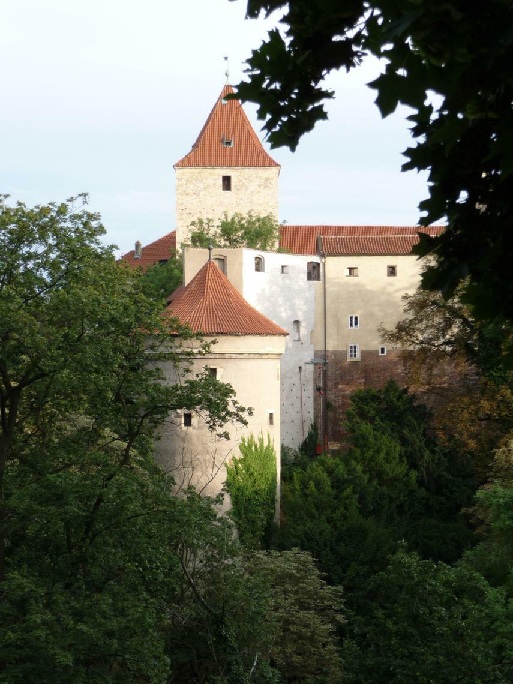
Thus, Dalibor of Kozojedy became the tower’s most famous noble guest, and earned the tower his name: Daliborka.
So was Dalibor a benevolent lord who took pity on his cruel neighbor’s serfs? Was he unjustly imprisoned and tortured with all kinds of medieval instruments? And does his restless, disparaging ghost still play phantom music in Daliborka Tower to this day?
Well, we don’t quite know. Facts have mixed with rumors for hundreds of years, leaving us a puzzle.
The chronicler Václav Hájek z Libočan, who lived about a generation later, claimed Dalibor had incited the serfs’ indigation himself, provoking them to rise up against Ploskovský. But was that such a bad thing, if Ploskovský was as cruel as myth makes him out to be? But there were more denigrating claims.
Czech journalist and politician František Ladislav Rieger (1818-1903) who published the first Czech national encyclopedia Slovník naučný, claimed that Dalibor was a bit of a rogue and opportunist. Based on the rumor that Dalibor’s own father had accused him of fraud, Rieger asserted that the sparkling, heroic version of Dalibor was most likely wrong, and that he’d seen a way to use the peasant uprising to his advantage.
And this may hold some truth. According to Daliborka tour guide Stanislav Kubát, there were two sides to Dalibor: he was decent enough to take his neighbor’s mistreated serfs under his protection, but he also illegally usurped some of Ploskovský’s estates. He had committed a crime in the eyes of the law – and that’s what ultimately led to his imprisonment and execution.
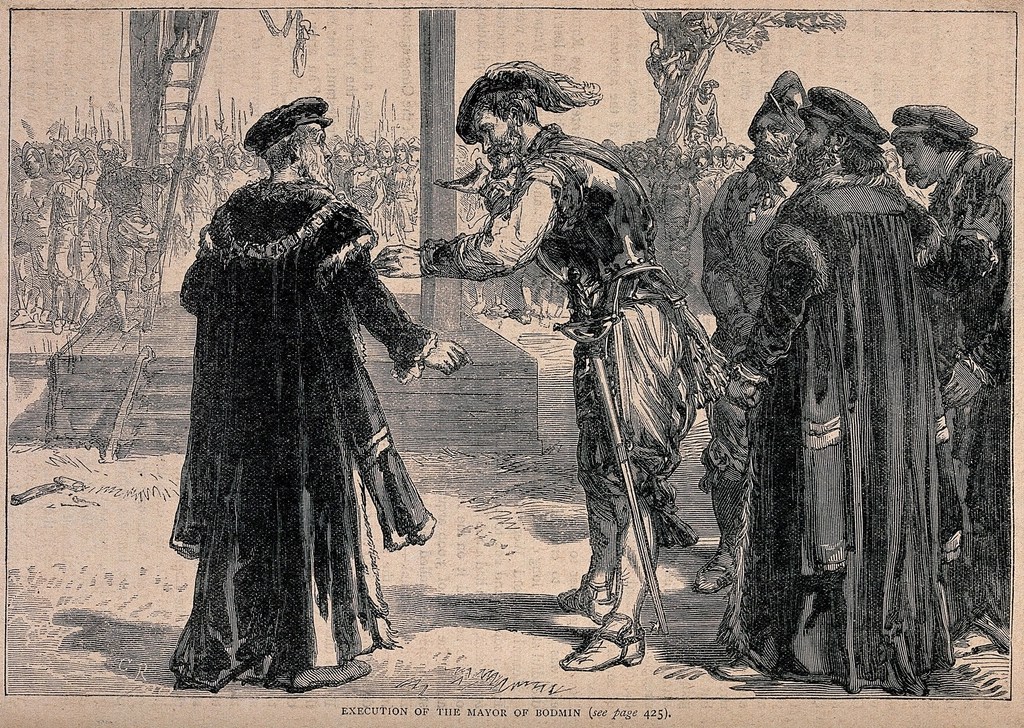
As for Dalibor’s violin, it’s extremely unlikely he was ever given a violin to play. As a noble, he probably had access to other diversions, such as writing equipment and books, and would have no reason to suddenly learn to play an instrument from scratch. How the historian Jirásek first came up with the violin idea is a mystery, but there are a few gruesome theories.
The violin myth could have stemmed from the use of the Shrew’s Fiddle (Halsgeige in German, literally “neck violin”), a yoke-like torture instrument that encircled the neck and the hands directly in front of the neck, restricting movement.
Almost unsurprisingly, the first intended use for the Shrew’s Fiddle was to subdue boisterous and assertive women in medieval Germany. Women who didn’t like their societal roles or who had something unpleasant to say (that their liege lord was a creep, for example) were clamped into the Shrew’s Fiddle until they learned to behave. But there’s no record of it being used on Dalibor.
Another origin of the violin myth could come from a more well-known torture device: the rack. Writer Josef Svátek (1835-1897) alleged that Dalibor had been stretched on the rack, causing him to “sing like a violin” – i.e., scream – so loudly people could hear it down on the street.
Again, there is no record of Dalibor being tortured, and it’s unlikely he ever was: his guilt was undeniable. There was no reason to torture a confession out of him.
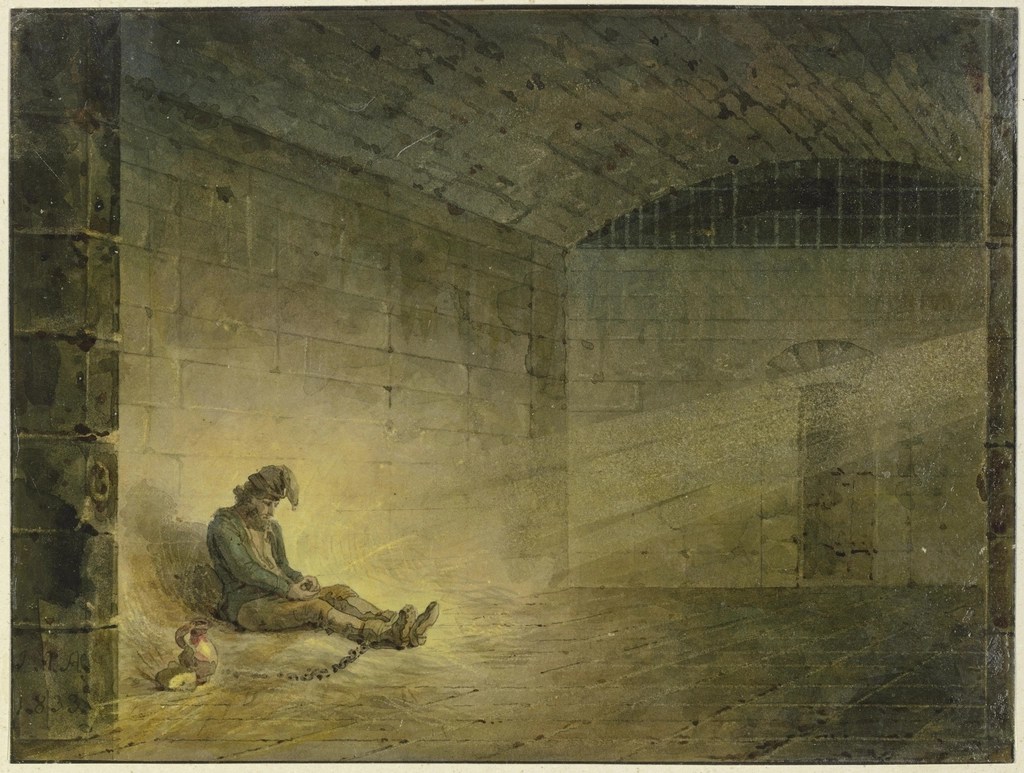
Whether Dalibor’s ghost haunts the tower is up to the ghost-hunters to decide. Prague was and is a city of music, and perhaps people were tricked by the echo of music against the castle walls into thinking that a lone busker’s tune was that of a ghost.
The tower burned down in the late 1700s, when its use as a prison finally came to an end. In my novel, the prison is still functioning as late as 1812, so I took some creative liberties to paint a haunting picture of what imprisonment was like there. It was White Tower at the opposite end of Golden Lane that continued as a prison, and it’s there that the use of torture has been unquestionably recorded. If there is a ghost, White Tower has my vote.
But when it comes to truly legendary status, Daliborka reigns supreme thanks to Dalibor of Kozojedy – so much so that there are around 2 million visitors to Golden Lane and Daliborka Tower every year. If you’re one of them, keep your ears peeled for the sound of a haunting violin.
 Mar von Zellen
Leave a comment