
As the name suggests, Nature Writing is usually nonfiction prose about – you guessed it – nature. Mostly based on the facts about the workings of plants and animals, Nature Writing can provide an interesting new look at not only scenery description in prose, but in all kinds of writing.

I don’t know about you, but when I try to paint a scene in a novel by explaining how the pine needles smell in the forest, or how this-and-that flower blooms only by the first tick-tock seconds of the full moon, I might as well be describing the mechanics behind a particle accelerator. In other words, something I know nothing about. (E.g. And there was a big whoosh, and the whoosh was full of tiny particles going really fast, and there were lasers, and computers, and stuff.)
In its most distinct form, Nature Writing creates characters out of non-human subjects such as the landscape itself, the animals that roam over it, or even just the atmosphere changes we see every day.
A mountain becomes an old man with a permanent stoop and a gravelly voice. A snail becomes an explorer moving deliberately over each leaf and stone, as seen in Virginia Woolf’s “Kew Gardens”.
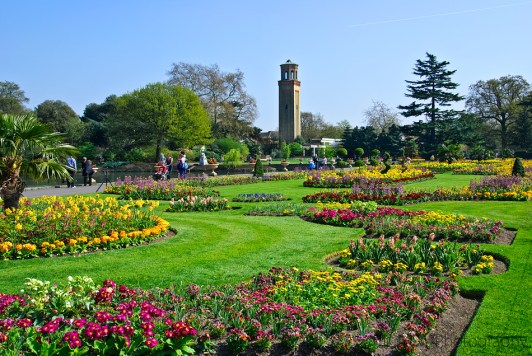
While there are human characters in Nature Writing, the purpose is to give a knowledgeable, often scientific, focus to the Earth and its non-human inhabitants. Knowing the types of flowers and trees present in Kew Gardens must have taken Virginia Woolf some thought and perhaps some hard study. Her vivid, colorful close-up of garden life could have been a boring lecture about watching the grass grow or petals wilt in the sunlight. Instead she gave the plants their own narratives, their own stories.
Giving intelligence to matter is another type of Nature Writing. For example, “fog drifted over the open moors as if it wished to bring the sea closer onto the land”, gives the fog an intelligence that fog probably doesn’t have (but who knows? have you ever tried talking to it?). In the previous sentence the fog becomes a character with a purpose and ambition.
Nature and matter are not only acted upon, but can act out their own desires, which brings in a whole new set of potential points of view.
Richard Mabey wrote in The Guardian, “It’s a recognition of the appropriate, and therefore intelligent, behavior of matter, and that landscapes have ‘memories’ embedded in their structure that influence their present environs, their future destinies – and the humans that pass through them.”
Nature Writing may not be the most intuitive kind of writing (after all, how often do we really contemplate the plight of a new-born bird, or the arduous trail of a banana slug?). But if we didn’t try to understand it and attempt to bring it closer to us, we would be missing so much of our current repertoire of classics: Walden by Henry David Thoreau, The Old Man and the Sea by Hemingway, After the Quake by Haruki Murakami, as well as hundreds of others.

Now there have been times when my lack of knowledge and lack of imagination about different natural phenomena totally ruined my confidence in a specific scene. I suggest, as a challenge for yourself, to read up on Nature Writing and begin incorporating its elements into your scenes.
When you can bring everything to life in your work – houseflies and tumbleweeds included – why wouldn’t you?
 Mar von Zellen
Leave a comment