
Fables, fairy tales, and folklore share many common ties between cultures. They’ve passed the test of time because they teach morals that relate to the human condition, and it’s the moral that makes the tale relevant no matter where or when it’s read.
Small things do change, however. In different countries and at different times, Cinderella’s shoes were made of grass or woven wool (comfier than glass–I mean, what sadist came up with that idea?). The Cinderella we know from the popular Disney animation (stripped sadly of the Grimm Brothers’ violence) was revised to reflect a European bourgeoisie society, but the core of the tale was always about the oppressed finding freedom and hard work being rewarded by an adorable singing godmother who we all know is really Betty White in disguise.
Let’s look at an example of cross-cultural similarities in three fairy tales from different parts of the world, which contain almost identical plots and (arguably) similar moral lessons. Warning: Spoilers ahead.
In “Bluebeard”, written by Charles Perrault in 17th-century France, an oppressed wife is given keys to all the doors in Bluebeard’s house and is told she can open all but one. Fueled by curiosity, she opens the forbidden door (whoa, didn’t see that coming) and discovers her husband’s previous wives all dead and hung up around the room.
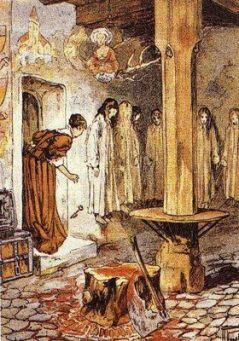
In “The Forbidden Chamber”, a Mexican fairy tale, an evil wizard captures a maiden for his wife, who is then commanded to open all the doors in the house but one. Fueled by curiosity, she opens the forbidden door (oh no she didn’t!) and finds all her sisters there, kidnapped and hypnotized.
In the German tale “Our Lady’s Child”, a young girl is allowed to open the 12 doors of heaven and see the secrets of the universe, but she is not allowed to open the 13th door. Fueled by curiosity (ok, wait a minute–why the heck would you open a door with an unlucky number after you’ve already seen all the secrets of the universe? obviously this girl wasn’t the brightest), the girl opens the 13th door, dies, and eventually achieves redemption. Each heroine in these three tales chose to open the forbidden door, and by being curious they saved themselves and others. Curiosity FTW!
But sometimes there are some clear differences between cultures. Like apples-to-oranges clear.
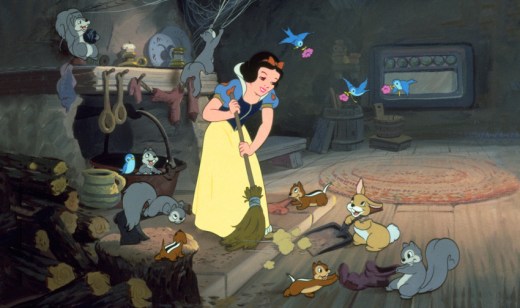
For example, the moral of “The Monkey and the Wedge” from an Indian collection of tales known as the Panchatantra says “do not meddle in others’ business.” Now think of Snow White, originating from Germany: she breaks into a cottage in the woods and most definitely meddles with the dwarfs’ possessions while they’re away. Even Goldilocks and the three bears portrays the same idea of meddling. Or take, for instance, the English story of Robin Hood. He meddles in the Prince’s affairs by stealing the Prince’s gold. In fact, in the East there are many fairy tales warning against meddling in others’ business, while in the West it seems to be a good thing if the meddling is fueled by innocent curiosity or a higher cause, such as inequality.
Cultural influence inevitably shapes fairy tales like dough. That’s why they’re so fascinating: they’re basically anthropological artifacts that tell us what the popular teachings might have been in a certain time and place.
Also fairy tales can be weird af and make you question human intelligence. But that’s another whole blog post.
 Mar von Zellen
Leave a comment