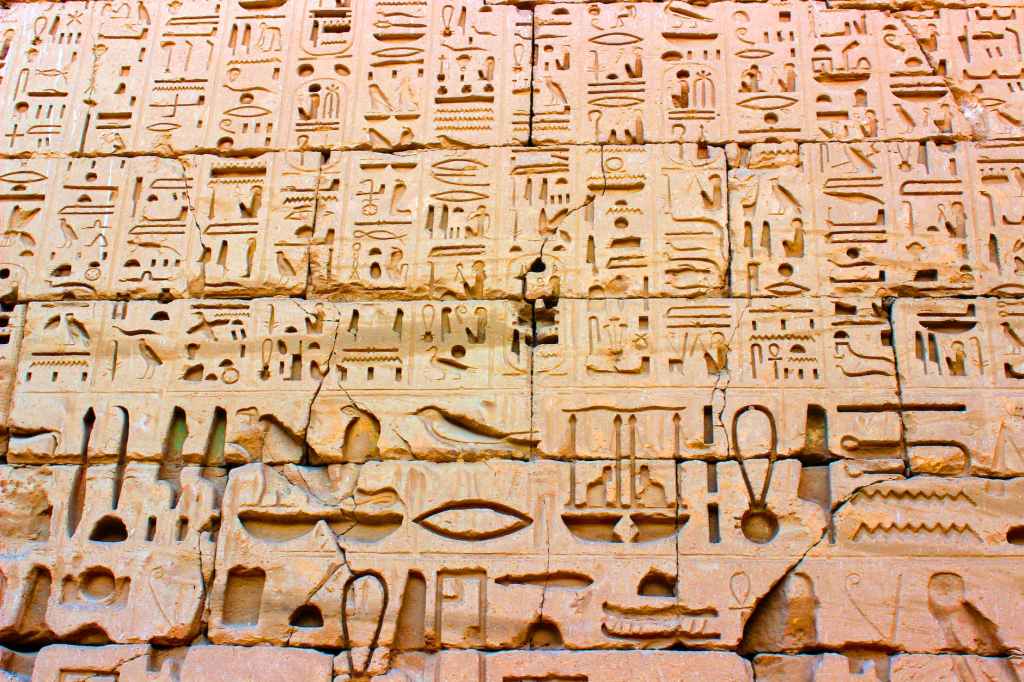
As you do when entering a complex spiritual enlightenment, I’m taking the time to really learn Ancient Egyptian hieroglyphics.

I’ve always been attracted to ancient Egypt, with its mysterious fluency in matters of magic, death, and immortality (OK, who’s NOT interested in those things? I know I’ll be passing around bionic organs at my 50th birthday party).
But now I’m going beyond paper crown cut-outs, bed sheet tunics, and ABC hieroglyphic representations of my name–in a cartouche, because of course I am a royal.
As I was beginning my lesson in verbs, I came across the glyph for “to love”. And it struck me. See, glyphs are made up of ideograms–pictures that together represent something else. For instance, “hear” is often written as an antelope’s ear next to an owl.
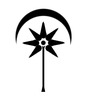
The ideogram for the verb “to love” is a hoe and a man eating: 
Don’t see the significance? Let me enlighten you, young grasshopper. While we in the western world idealize love as a turbid dance of passion, romance, red roses, and sexyness, the ancient Egyptians knew the real deal–that love is something that grows and must be cultivated with care and labor.
The hoe in the glyph represents tilling the soil. You must believe and love the potential for growth, and give it your energy and time. You don’t start with an already-flourishing, Buckingham-Palace-worthy garden. Love must be labored for, in the hot sun, and in the cold of winter.
The man with his hand to his mouth symbolizes eating, drinking, speaking, and thinking. These are the benefits you reap when your harvest comes in. Your energy is returned to you. Love makes YOU grow. It sustains you, after you have sustained it.
Powerful, eh? This love doesn’t have to just be romantic love. It can be the love of the self, the love of family, the love of pets, or just general love for life. It’s a wonderful metaphor that brings to mind some words from Pema Chodron’s book “The Places that Scare You”:
At the beginning joy [or love] is just a feeling that our own situation is workable. We stop looking for a more suitable place to be. We’ve discovered that the continual search for something better does not work out. This doesn’t mean that there are suddenly flowers growing where before there were only rocks. It means we have confidence that something will grow here.
P.S., Want to learn Hieroglyphics for yourself? Take this simple online course from an Egyptology student at Harvard.
 Mar von Zellen
Leave a comment